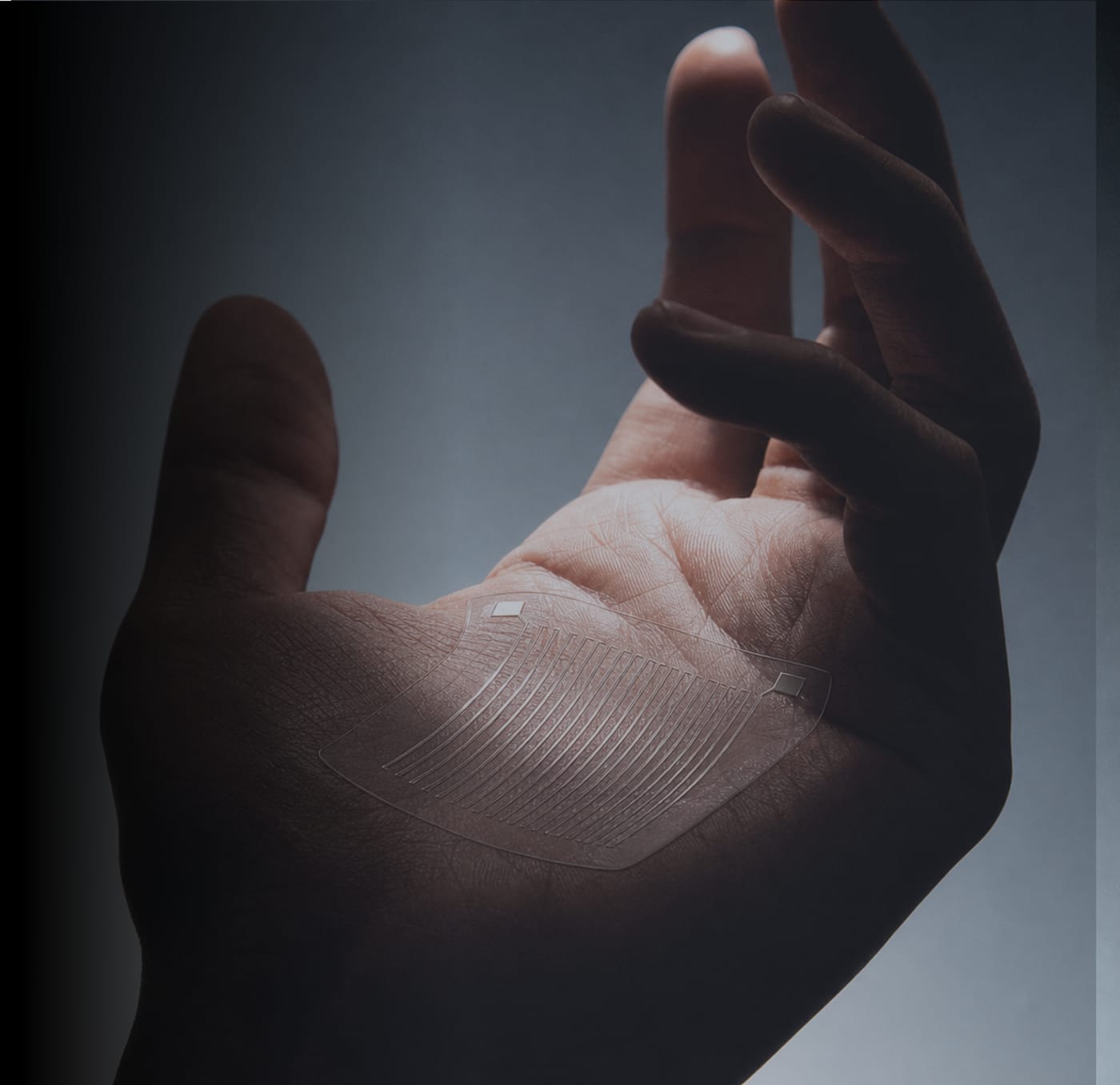
Ultra-Flexible 3D Force-Sensing Electronic Skin

From Bio-Based Materials to Sensing
Sensing begins with materials.
Through proprietary fermentation technology, SynMetabio develops bio-based nanomaterials that offer flexibility, processability and material compatibility.
Building on this foundation, we combine bio-based materials with liquid metal to develop stretchable conductive materials, bringing together material flexibility and electrical conductivity for flexible electronics.
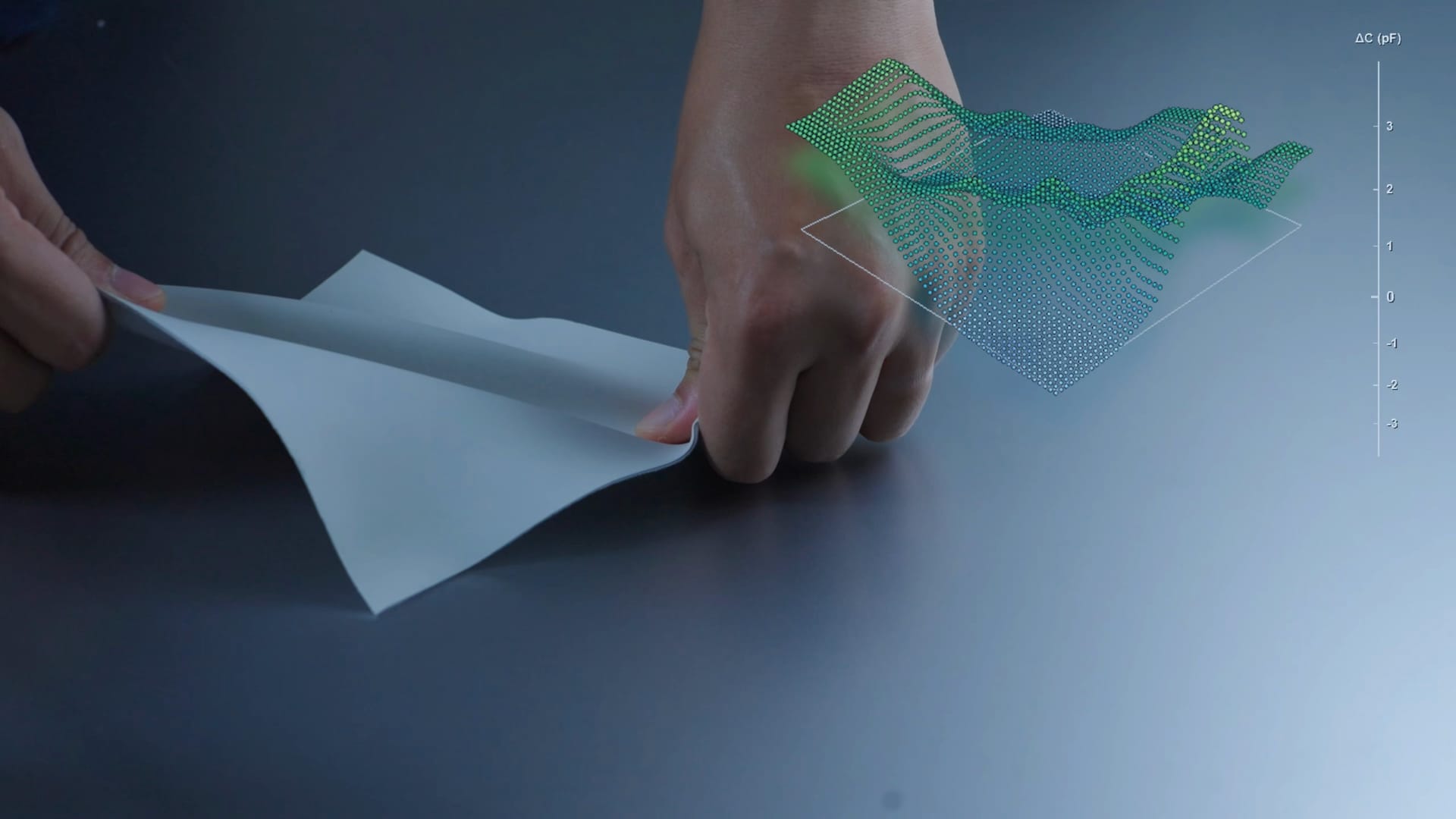
Sensing Through Deformation
SynMetabio is designed around stretchable conductive structures and deformation sensing. Through stretching demonstrations and data visualization, changes in deformation become observable sensing information, with reversible electrical recovery after rebound.

One SkinMultiple Functions
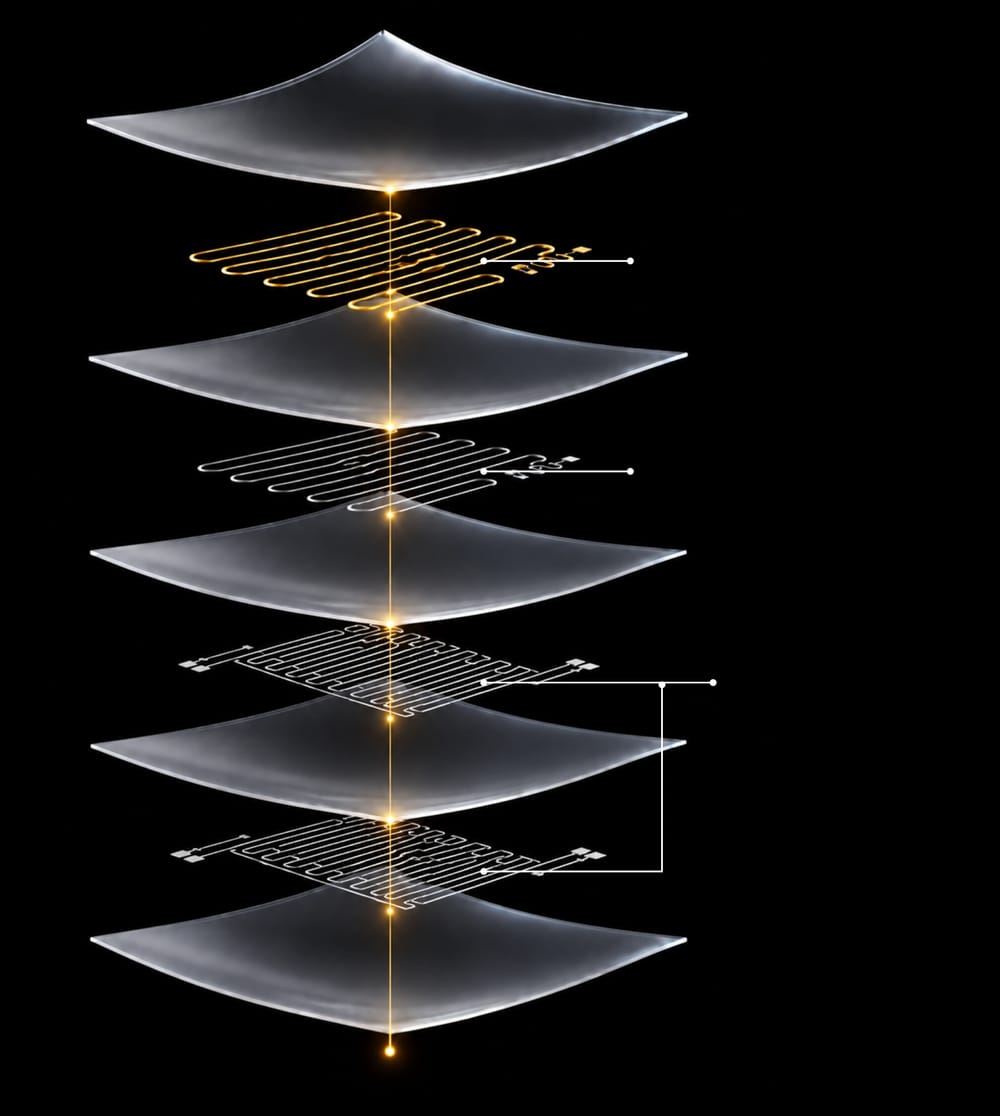
Ultra-thin, stackable and patternable materials enable multiple
functions to be integrated within a single flexible device.
Pressure sensing converts mechanical input into electrical signals,
temperature sensing responds to temperature changes, and active heating
transforms electrical input into thermal output.
Through multilayer design, these functions are integrated into one flexible
system, enabling a broader range of sensing and response capabilities.
Product Specifications
- Thickness
- ≤ 0.1 mm per layer; multilayer stackable
- Spatial Resolution
- 4 mm × 4 mm (Customizable)
- Array Configuration
- Standard: 7 × 7 / 5 × 5; 8 × 8 (32 mm × 32 mm); Customizable
- Minimum Line Width
- 0.5 mm (Additive screen printing, no photolithography or etching)
- Form Factor
- Cut-to-Shape; conformable to curved surfaces
- Sensing Modes (Optional)
- Pressure / Shear Force / Temperature / Active Heating
- Stretchability
- 0–700% extreme deformation; reversible electrical recovery after rebound
- Sampling Rate
- 400 Hz @ 8 × 8 array (Measured average: 465 fps)
- Channel Consistency
- CV ≤ 6.6% (Target: ≤ 5% after point-by-point calibration)*
- Measurement Noise
- Static noise ≤ 20 mV rms (1σ)*
- Heating Performance
- Room temperature to approximately 60°C; surface uniformity ≤ ±2°C (Target)*
- Service Life
- 200,000 folding cycles / 100,000 Martindale abrasion cycles (Material platform validation)*
- Manufacturing Process
- Additive Screen Printing
- Data Interface
- USB Type-C
*Note: Some values are based on engineering prototype measurements or material platform validation. Mass-production targets and final specifications are subject to the official product datasheet.

From a Proven Material Platform to Flexible Electronics
SynMetabio’s bio-based material platform has an established foundation in industrial-scale production. Building on this material system, flexible electronics incorporate printable conductive materials and corresponding manufacturing processes.
Through additive patterning and multilayer design, the technology is developed for integration with existing industrial production systems, creating a pathway from material development to scalable manufacturing.
Finding More about SynMetabio’s scaled production (opens in a new tab)Bringing Flexible Sensing into More Real-World Applications…
-

Smart Home -

Robots Skin -

Smart Wearables -

Smart Home -
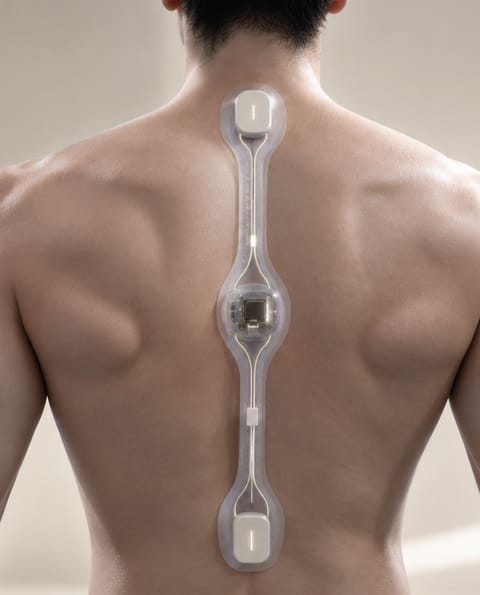
Medical Patches -

Smart Cockpits and Child Seats -

Smart Wearables -

Smart Wearables -
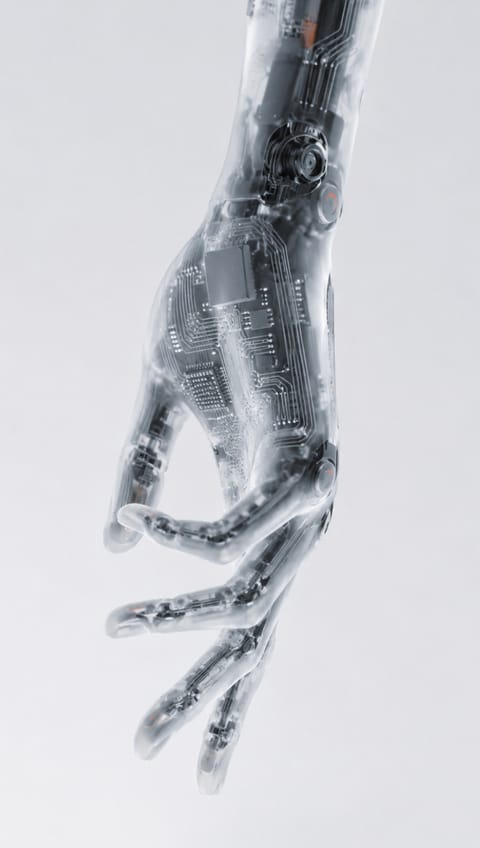
Robots Skin
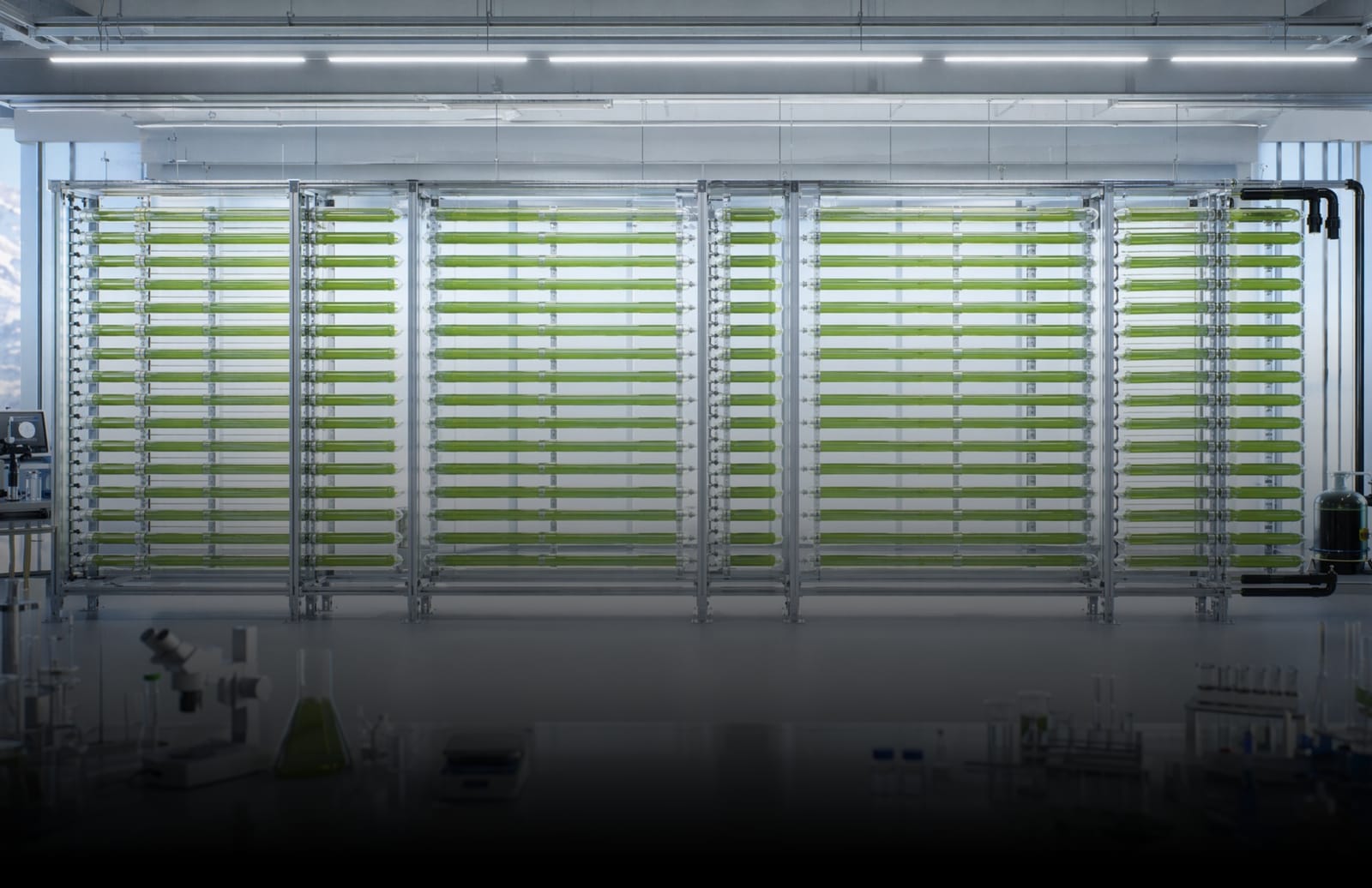
About SynMetabio
Founded in 2021, SynMetabio develops and manufactures biomaterials based on synthetic biology.
Through microbial fermentation, the company produces nanoscale biomaterials and further develops them into functional pastes, flexible substrates and composite materials for applications including bio-based leather and flexible electronics.
From material development to product innovation, SynMetabio continues to expand the functional capabilities and applications of bio-based materials.
Finding More about SynMetabio (opens in a new tab)
Contact Us
Mailing Address
8th Floor, Building 1, No. 430 Miaoqiao Road, Pudong New Area, Shanghai
Email Address